

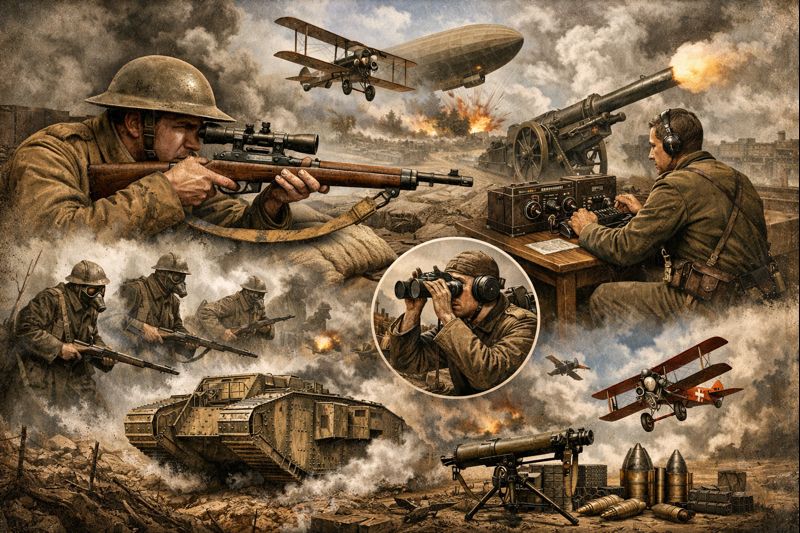
The First World War, often dubbed the “war to end all wars,” stands as a stark testament to humanity’s capacity for both innovation and destruction. From 1914 to 1918, the world witnessed an unprecedented escalation of violence, largely driven by rapid technological advancements. Understanding how did technology change the way WW1 was fought is crucial to grasping the conflict’s unique character, its profound human cost, and its enduring legacy on modern warfare. This article, updated for 2026, delves into the transformative impact of technology on every aspect of the Great War, from the trenches to the skies and seas.
Key Takeaways
- Technological innovations like the machine gun and improved artillery profoundly shifted warfare from maneuver to static trench lines, creating a deadly stalemate.
- New weapon systems, including tanks, poison gas, and combat aircraft, emerged, forever altering battlefield dynamics and introducing new dimensions of conflict.
- Advancements in communication, logistics, and medicine, though often challenged, played critical roles in sustaining massive armies and responding to unprecedented casualties.
- The industrial scale of production and the application of science to warfare led to unimaginable levels of destruction and human suffering, marking WWI as a uniquely brutal conflict.
- WWI became a proving ground for technologies that would define 20th-century warfare, laying the groundwork for future military strategies and global conflicts.
The Dawn of Trench Warfare: How Did Technology Change the Way WW1 Was Fought on the Ground?
Before 1914, military doctrines largely anticipated wars of rapid maneuver and decisive battles, reminiscent of earlier conflicts. However, the initial clashes of World War I quickly revealed the obsolescence of these tactics in the face of modern firepower. The introduction and widespread deployment of certain technologies fundamentally altered the battlefield, leading to the entrenched stalemate that defined the Western Front.
The Machine Gun: A Game Changer in Infantry Combat
No single weapon perhaps better symbolizes the brutal efficiency of World War I than the machine gun. While not new in 1914, its improved reliability, rate of fire, and portability transformed it from a niche weapon into a battlefield dominator. Early machine guns like the German Maxim or the British Vickers could fire hundreds of rounds per minute, creating an impenetrable curtain of lead across open ground [1].
- Defensive Superiority: The machine gun made frontal assaults across open ground suicidal. A handful of well-positioned machine guns could mow down entire battalions of advancing infantry. This defensive advantage was a primary driver for the digging of trenches, as soldiers sought protection from this devastating firepower.
- Static Warfare: The immense firepower of machine guns, combined with improved artillery, made rapid advances virtually impossible. Armies dug in, creating elaborate trench systems stretching for hundreds of miles, leading to the infamous stalemate on the Western Front.
- Tactical Adjustments: Commanders were forced to rethink infantry tactics entirely. Massed charges gave way to smaller, more dispersed units, and the development of specialized assault troops equipped with grenades and submachine guns began to emerge later in the war.
Artillery: The King of Battle and Its Evolution
Artillery pieces existed long before WWI, but the conflict saw massive leaps in their design, effectiveness, and deployment. Field guns, howitzers, and massive siege guns became more powerful, accurate, and rapid-firing, shaping the battlefield even more than the machine gun in some respects [2].
“The artillery preparations before an attack were often more destructive to the landscape and the morale of the defenders than any subsequent infantry charge. The sheer scale of shells fired was mind-boggling, a testament to industrial might.”
- High-Explosive Shells: The widespread use of high-explosive shells, rather than shrapnel, made artillery far more lethal against entrenched positions. These shells pulverized defenses, created massive craters, and devastated enemy morale.
- Indirect Fire: Advancements in ballistics and the development of sophisticated targeting methods allowed artillery to fire indirectly, hitting targets out of sight. This required complex calculations, spotters (including early aircraft), and reliable communication.
- Creeping Barrages: Towards the end of the war, the “creeping barrage” became a standard tactic. Artillery fire would move forward incrementally, just ahead of advancing infantry, clearing obstacles and suppressing enemy defenders, providing a crucial shield for the attackers.
- Logistical Demands: The sheer quantity of ammunition required for sustained bombardments placed immense strain on logistics, necessitating the development of vast railway networks and motorized transport.
New Weapon Systems: Reshaping the Battlefield and Human Experience
The stalemate of trench warfare spurred intense innovation, leading to the rapid development and deployment of entirely new categories of weaponry designed to break the deadlock. These innovations irrevocably altered how did technology change the way WW1 was fought, introducing new horrors and tactical possibilities.
Tanks: The Answer to the Trenches?
Developed independently by Britain and France, the tank was conceived as a “landship” capable of crossing trenches, crushing barbed wire, and shrugging off machine-gun fire. Its debut on the Somme in 1916 was largely underwhelming, but its potential was clear [3].
| Feature | Early WWI Tanks (e.g., Mark I) | Late WWI Tanks (e.g., FT-17) |
|---|---|---|
| Appearance | Clunky, rhomboidal, slow | More maneuverable, lighter, turreted |
| Tactical Role | Overcome trenches, psychological shock | Infantry support, limited breakthrough |
| Speed | Very slow (2-4 mph) | Faster (5-8 mph) |
| Reliability | Prone to breakdowns, difficult terrain | Improved, but still challenging |
| Impact | Limited initial tactical success, high potential | Significant tactical impact in final offensives |
- Overcoming Obstacles: Tanks proved effective at crushing barbed wire and navigating difficult terrain, providing a mobile shield for advancing infantry.
- Psychological Impact: The appearance of these metal behemoths initially caused panic among enemy troops, though this effect diminished as soldiers learned to counter them.
- Future Warfare: Despite their early imperfections, tanks demonstrated the concept of mechanized warfare, laying the groundwork for Blitzkrieg tactics in WWII.
Poison Gas: The Chemical Horror
The introduction of poison gas by the Germans in 1915 marked a new, horrifying chapter in warfare. Chlorine, phosgene, and mustard gas caused agonizing suffering, blindness, and death [4].
- Types of Gas:
- Chlorine Gas: Caused irritation, coughing, and suffocation.
- Phosgene Gas: More insidious, with delayed effects that could lead to death hours after exposure.
- Mustard Gas: A vesicant that caused severe blistering of the skin, eyes, and respiratory tract. Its lingering effects contaminated battlefields for days.
- Defensive Measures: The development of increasingly sophisticated gas masks became essential for survival, leading to a constant technological arms race between offensive gas agents and defensive equipment.
- Limited Tactical Success: While causing immense casualties and fear, gas attacks were often unpredictable due to wind conditions and never achieved decisive strategic breakthroughs. Its primary legacy was psychological terror and a determination among nations to outlaw its use in future conflicts.
Aircraft and Aerial Combat: A New Dimension of War
At the war’s outset, aircraft were rudimentary, primarily used for reconnaissance. By 1918, they had evolved into specialized fighters, bombers, and observation planes, creating an entirely new theater of war [5].
- Reconnaissance: Early planes provided invaluable intelligence, mapping enemy trench lines, spotting artillery positions, and reporting troop movements, effectively eliminating tactical surprise.
- Fighter Planes and Dogfights: The need to deny enemy reconnaissance led to the arming of aircraft. The invention of the interrupter gear (synchronizer) by Anthony Fokker in 1915, allowing a machine gun to fire through a propeller, revolutionized aerial combat. This led to iconic dogfights and the rise of “ace” pilots.
- Bombing: While limited in scale compared to later wars, early bombing raids targeted supply depots, railway lines, and even cities, introducing the concept of strategic bombing.
- Observation Balloons: Often overlooked, tethered observation balloons provided stable platforms for artillery spotting and were prime targets for fighter pilots, leading to intense aerial battles around them.
Support Technologies: The Unsung Heroes of Logistics and Survival
Beyond the direct combat weapons, advancements in communication, transportation, and medical technology were equally critical in enabling and sustaining the immense scale of World War I. These innovations also fundamentally illustrate how did technology change the way WW1 was fought by influencing organizational capacity and casualty management.
Communication: Bridging the Gaps
Coordinating millions of soldiers across vast fronts required more effective communication than ever before. While primitive by today’s standards, WWI saw significant reliance on and improvement of communication technologies [6].
- Telephones and Telegraphs: Extensive networks of telephone and telegraph lines were laid, connecting headquarters to front-line positions. However, these lines were highly vulnerable to artillery fire and sabotage, often severed during bombardments.
- Wireless Telegraphy (Radio): Early radio technology was bulky and unreliable, primarily used for communication between ships and later for communication with aircraft. Its lack of security made it risky for sensitive messages.
- Runners and Pigeons: Despite technological advancements, human runners, visual signals (flags, lamps), and even carrier pigeons remained vital, especially in the chaos of trench warfare when other systems failed.
Transportation and Logistics: Fueling the War Machine
Moving vast quantities of men, munitions, and supplies to the front lines was a monumental logistical challenge that demanded technological solutions.
- Railways: Existing railway networks were crucial for rapid troop mobilization and mass transport of supplies from factories to the front. Strategic railways were often built or expanded specifically for military purposes.
- Motorized Transport: The internal combustion engine found its military calling in WWI. Trucks and staff cars, though still relatively new, began to supplement horse-drawn transport, especially for carrying supplies over shorter distances from railheads to the trenches. The war dramatically accelerated the development and mass production of reliable automobiles.
- Merchant Shipping & Submarines: For nations relying on overseas supply lines, merchant shipping was paramount. Conversely, the German U-boat (submarine) campaign, sinking Allied merchant vessels, demonstrated a devastating new form of naval warfare aimed at strangling enemy supply lines [7]. This led to the development of convoy systems and anti-submarine warfare technologies like depth charges.
Medical Advancements: Battling Unprecedented Casualties
The scale and nature of WWI casualties forced rapid innovations in military medicine.
- Blood Transfusions: The development of blood storage techniques and understanding of blood types made transfusions possible on a larger scale, saving countless lives, particularly from shock and blood loss.
- Antiseptics and Surgery: While surgical techniques were still rudimentary, the use of antiseptics like Carrel-Dakin solution helped combat infection, a major killer. Specialized wound surgery, particularly for devastating shrapnel and bullet wounds, became more common.
- Mobile Hospitals and Evacuation: Organized systems for evacuating wounded soldiers from the front lines to clearing stations and then to base hospitals were established, utilizing ambulances and hospital trains.
- Psychological Trauma: The concept of “shell shock” emerged, recognizing the severe psychological impact of continuous bombardment and combat. While poorly understood at the time, it highlighted the mental health toll of modern warfare.
Naval Warfare: The Silent Evolution Below the Waves
While the land war was defined by trenches, naval warfare also underwent a significant technological transformation, particularly with the emergence of the submarine, impacting how did technology change the way WW1 was fought at sea.
- Dreadnoughts and Battleships: The pre-war naval arms race had led to the construction of powerful battleships like the British Dreadnought, characterized by “all-big-gun” armaments and steam turbine propulsion. The Battle of Jutland in 1916 showcased these behemoths but ended inconclusively, demonstrating the caution inherent in risking such valuable assets.
- Submarines (U-boats): German U-boats proved to be the most revolutionary naval weapon. Capable of sinking merchant ships and warships undetected, they posed a grave threat to Allied supply lines. Their use in unrestricted submarine warfare led to the sinking of ships like the Lusitania, influencing global opinion and eventually drawing the United States into the war.
- Anti-Submarine Warfare: The threat of U-boats spurred the development of countermeasures, including depth charges, hydrophones for detecting submerged vessels, and the convoy system, where merchant ships traveled in groups protected by warships.
The Enduring Legacy: How WWI Technology Shaped Future Conflicts
The technological crucible of World War I did not end with the armistice. The lessons learned and the innovations developed had profound implications for the future of warfare and society as a whole.
- Mechanized Warfare: The tank’s rough debut paved the way for the fully mechanized armies and Blitzkrieg tactics of World War II. The concept of combining tanks, motorized infantry, and air support became central to modern military doctrine.
- Air Power: The rudimentary air forces of WWI blossomed into independent branches of service, with air superiority becoming a crucial objective in subsequent conflicts. The foundations for strategic bombing and close air support were laid.
- Industrial Mobilization: The war demonstrated the critical importance of a nation’s industrial capacity to sustain modern warfare. Entire economies had to be repurposed for wartime production, a model that would be replicated in WWII.
- Total War: Technology enabled a “total war” that mobilized entire populations and resources, blurring the lines between combatants and civilians.
- Ethical Dilemmas: The use of poison gas and unrestricted submarine warfare raised profound ethical questions about the conduct of war, leading to international treaties and conventions aimed at limiting the brutality of future conflicts.
Frequently Asked Questions About Technology’s Impact on WWI
How to Understand the Technological Transformation of WWI
- Step 1: Assess Pre-War Technology and Doctrine. Begin by understanding the military strategies and available technologies just before 1914. This context highlights the stark contrast with the war’s later stages.
- Step 2: Identify Key Early Innovations. Focus on the machine gun and improved artillery. Understand how these two technologies alone were enough to render traditional infantry charges obsolete and force armies into trenches.
- Step 3: Study New Weapon Systems. Delve into the development and deployment of tanks, poison gas, and aircraft. Analyze their intended purpose, initial effectiveness, and how they evolved throughout the conflict.
- Step 4: Review Support Technologies. Do not overlook the crucial roles of advancements in communication (telephone, radio), logistics (railways, motorized transport), and medicine (blood transfusions, mobile hospitals). These innovations supported the war effort and managed its consequences.
- Step 5: Synthesize Overall Impact. Connect these individual technological changes to the broader themes of the war: the stalemate, the unprecedented casualties, the concept of total war, and the long-term legacy on military strategy and international relations.
Key Terms Defined
A form of land warfare where combatants occupy fortified trenches, leading to a stalemate. It was characterized by elaborate dugout systems, machine guns, artillery, and the constant threat of ‘no man’s land’.
The unoccupied territory between the front lines of two opposing armies, often heavily shelled, fortified with barbed wire, and covered by machine gun fire, making crossing it extremely hazardous.
An artillery tactic where a line of shells would systematically move forward, just ahead of advancing infantry, to suppress or destroy enemy positions and allow infantry to close with the enemy under cover.
An abbreviation for the German word ‘Unterseeboot’ (undersea boat), referring to German submarines used effectively in both World Wars to sink Allied shipping.
A term coined during World War I to describe the psychological trauma experienced by soldiers exposed to the horrors of trench warfare and constant bombardment, now recognized as a form of post-traumatic stress disorder (PTSD).
Conclusion: The Unstoppable March of Innovation and Its Human Cost
The First World War remains a powerful historical marker for how did technology change the way WW1 was fought, transforming conflict from a matter of maneuver and bravery into a brutal, industrialized meat grinder. From the machine gun’s devastating impact on infantry tactics to the emergence of tanks, aircraft, and submarines, technology fundamentally reshaped every facet of the battlefield. It led to unprecedented levels of destruction, unimaginable casualties, and a profound re-evaluation of military strategy.
The innovations born out of WWI did not just define that conflict; they laid the essential groundwork for 20th-century warfare. Tanks proved the concept of mechanized ground forces, aircraft established the importance of air superiority, and chemical weapons raised ethical dilemmas that resonate to this day. The logistical challenges of supplying millions of soldiers spurred advancements in transportation and industrial organization that influenced entire economies.
As we reflect in 2026, the lessons from WWI’s technological transformations remind us of the double-edged nature of human ingenuity – its capacity to solve problems and its potential to inflict immense suffering. Studying this period offers critical insights into the continuous evolution of conflict and the perpetual need to balance technological advancement with ethical considerations.
Actionable Next Steps for Further Exploration
- Visit Historical Sites: If possible, visit WWI battlefields, museums, and memorials (e.g., Imperial War Museum, Western Front sites) to gain a tangible understanding of the scale and impact of the technology.
- Read Primary Sources: Explore diaries, letters, and memoirs of soldiers and civilians to understand the personal experience of technological warfare.
- Watch Documentaries: Many excellent documentaries provide visual context and expert analysis of WWI technology.
- Study Specific Innovations: Choose one technology (e.g., aircraft, artillery) and research its specific development, impact, and evolution throughout the war and beyond.
- Engage in Discussion: Join online forums or history groups to discuss and debate the strategic implications and ethical considerations of WWI technology.
References
- Ellis, John. The Social History of the Machine Gun. Johns Hopkins University Press, 1986.
- Hogg, Ian V. Artillery of World War I. Stackpole Books, 2004.
- Fletcher, David. British Tanks 1915–19: Mark I to V. Osprey Publishing, 2004.
- Richter, Donald. Chemical Soldiers: British Gas Warfare in World War I. University Press of Kansas, 1992.
- Guttman, Jon. Pusher Aces of World War 1. Osprey Publishing, 2009.
- Corbett, Sir Julian. Naval Operations, Vol. III: The Battle of Jutland. Longmans, Green and Co., 1923.
- Winton, John. The Victoria Cross at Sea: From the Crimean War to the Falklands. Pen & Sword Books, 2004.